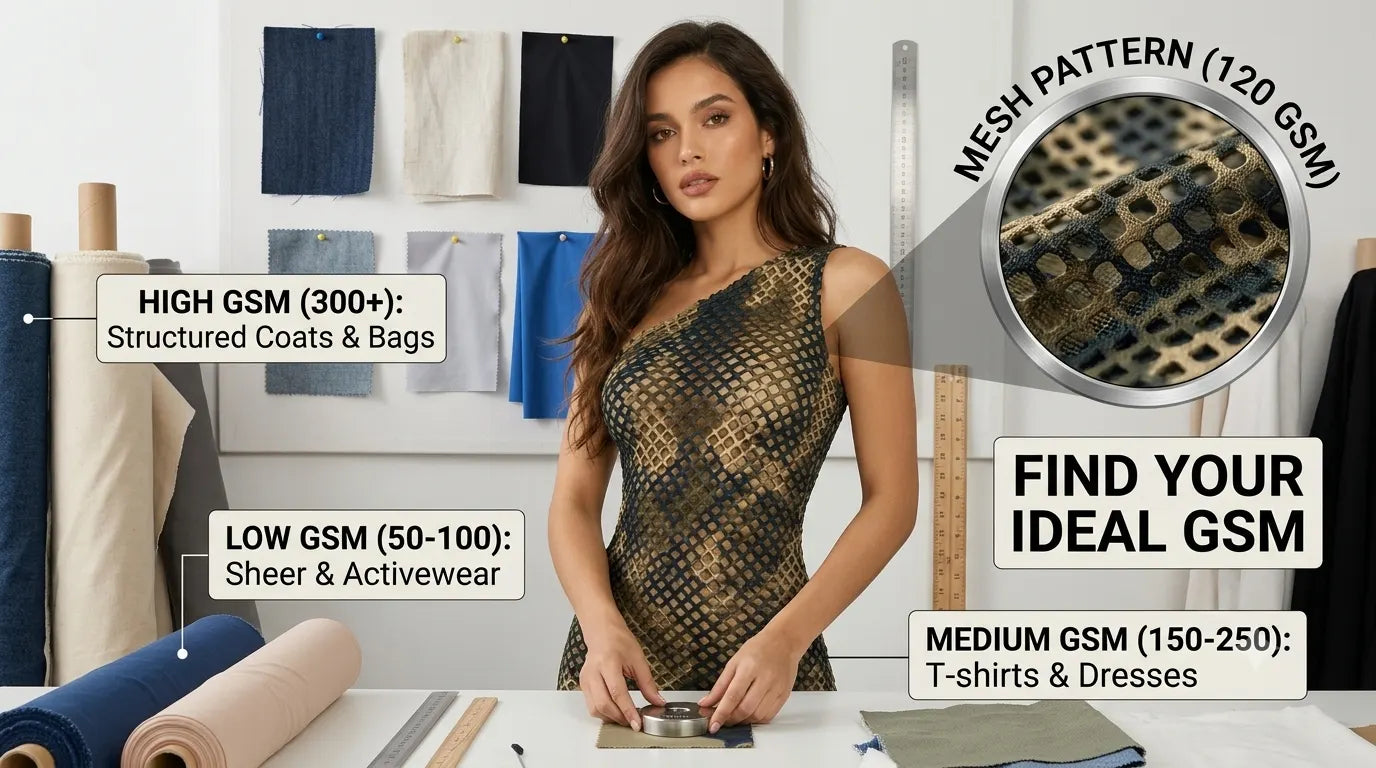
Fabric Weight (GSM) Guide for Spandex Garments
Choosing the right fabric weight can make or break a stretch garment. Two spandex fabrics may look alike on a screen, yet one feels sheer and flimsy while the other feels dense and supportive. The difference is GSM. If you make leggings, swimwear, shapewear, or dancewear, understanding GSM helps you avoid costly sourcing mistakes. Whether you plan to buy 4 way stretch spandex fabric online or order samples first, this guide explains what GSM means and how to pick the right weight for every product.
What Is GSM in Fabric?
GSM stands for grams per square meter. It measures how much one square meter of fabric weighs. A higher GSM means a heavier, thicker, and usually more opaque fabric. A lower GSM means a lighter, thinner, and more breathable fabric.
GSM is not a quality score on its own. A 150 GSM fabric is not better than a 250 GSM fabric. Each suits a different purpose, and the right choice depends on the garment, the climate, and the level of support you want.
Why GSM Matters for Spandex Garments
Spandex, also called elastane or Lycra, adds stretch and recovery. GSM controls how that stretch behaves in real use. Here is what changes as weight goes up or down:
- Opacity: Low GSM fabrics can turn see-through when stretched. Heavier fabrics keep coverage during squats, bends, and lifts.
- Compression: Higher GSM spandex blends hold the body more firmly, which is ideal for support garments.
- Drape and comfort: Lighter fabrics move softly and feel cooler. Heavier fabrics feel structured and warm.
- Durability: Dense knits resist pilling, snagging, and bagging better over repeated wear and washing.
Recommended GSM Ranges by Garment Type
Use these ranges as a starting point for your product development.
120 to 160 GSM: Lightweight fabric for dance tops, summer camisoles, base layers, and breathable yoga tees. Always check opacity before bulk ordering.
160 to 220 GSM: Mid weight fabric for everyday activewear, bike shorts, sports bras, and swimwear linings. This range balances comfort, stretch, and coverage.
220 to 280 GSM: Medium to heavy fabric for performance leggings, gym tights, and squat proof bottoms. If you plan to buy spandex fabric by the roll for a leggings line, this is usually the sweet spot.
280 to 350 GSM: Heavy fabric for shapewear, waist trainers, compression wear, and winter tights. Many brands source high GSM compression spandex fabric in this range for firm control.
How to Choose the Right GSM
Start with the end use. Ask yourself what the wearer will do in the garment and what the weather will be like. A yoga legging for hot climates may work well at 200 to 230 GSM, while a gym legging for heavy lifting performs better at 240 to 280 GSM.
Next, consider the spandex percentage. A fabric with 10 percent spandex at 220 GSM will feel different from one with 20 percent spandex at the same weight. Higher spandex content increases stretch and recovery, but it can also make the fabric feel tighter. Always review GSM together with fiber blend, such as nylon spandex or polyester spandex.
Finally, think about your target price. Heavier fabric uses more yarn, so it costs more per meter. Balance performance and budget so your final garment price stays competitive.
Common GSM Mistakes to Avoid
- Ordering by GSM alone. Knit structure, yarn quality, and finishing also affect feel and performance.
- Skipping the stretch test. Pull the fabric in both directions and check that it recovers fully without distortion.
- Ignoring opacity. A fabric can look solid on the roll but turn sheer when worn. Do the stretch and light test.
- Mixing GSM across a collection. Inconsistent weights can cause uneven fit and finish between matching pieces.
- Not requesting samples. Swatches show real weight, hand feel, and color before you commit to volume.
Quick Tips for Testing GSM
You can verify GSM with a GSM cutter and a digital scale. Cut a 100 square centimeter circle, weigh it in grams, and multiply by 100 to get GSM. Ask your supplier for a tolerance, since a variation of 5 percent is common in the industry.
Conclusion
GSM is one of the most useful numbers on a spandex fabric spec sheet. Match it to your garment type, pair it with the right fiber blend, and always test before you scale. If you are building a new activewear, swimwear, or shapewear line, partnering with a reliable wholesale spandex fabric supplier gives you consistent weights, stable quality, and better pricing on repeat orders.
Ready to start? Browse our range, request swatches, and find the perfect GSM for your next collection.