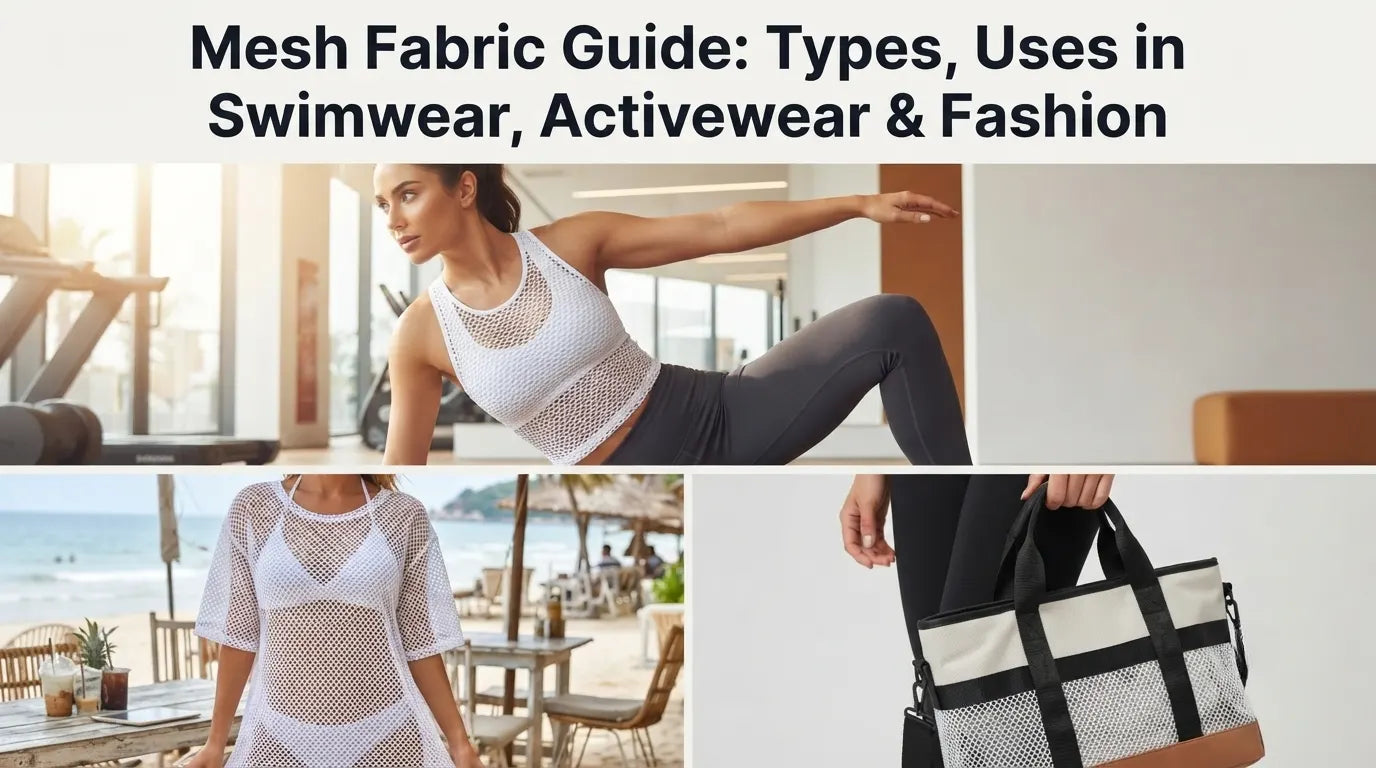
Mesh Fabric Guide: Types, Uses in Swimwear, Activewear & Fashion
Whether you are designing athletic gear, beachwear, or high-fashion pieces, mesh fabric is one of the most versatile materials in the textile world. Lightweight, breathable, and visually striking, mesh fabric for clothing has evolved far beyond its industrial roots into a staple of modern apparel. This guide walks you through the most popular types and how each one performs in real-world applications.
What Is Mesh Fabric?
Mesh fabric is a textile characterized by its open, net-like construction, formed by weaving, knitting, or bonding yarns to create a structured grid of holes. The size of these holes, the fiber content, and the method of construction all determine how a mesh performs. Some versions are barely-there and sheer; others are thick, durable, and compression-grade.
Breathable mesh fabric is particularly valued in performance and sportswear because it promotes airflow and moisture management, keeping the wearer cool and dry during physical activity.
Common Types of Mesh Fabric
Understanding the different constructions helps you match the right material to the right end use:
- Powernet mesh fabric is a four-way stretch knit with strong compression properties. It is the go-to choice for shapewear, swimwear lining, and structured activewear panels that need to hold their shape under pressure.
- Athletic mesh fabric, often made from polyester or nylon, is engineered for high-performance sportswear. It wicks moisture efficiently, dries fast, and stands up to repeated washing without losing structure.
- Nylon mesh fabric offers durability and a smooth hand feel. It is widely used in swimwear, lingerie, and activewear where strength and stretch are both required.
- Polyester mesh fabric is the most budget-friendly option and is extremely resistant to shrinking, fading, and abrasion, making it ideal for team uniforms, bags, and casual activewear.
- Stretch mesh fabric is a broad category covering any knit mesh with two-way or four-way stretch. It is the backbone of fitted garments like bike shorts, leggings, and rash guards.
- Tulle and illusion mesh are fine, sheer options used in bridal wear, evening gowns, and dancewear for their delicate, floating appearance.
Mesh Fabric in Swimwear
Mesh fabric for swimwear must meet a strict set of performance criteria. It needs to resist chlorine and saltwater degradation, dry rapidly, and maintain stretch after repeated exposure to water. Nylon mesh fabric and polyester mesh fabric are the two dominant choices here. Nylon offers superior softness and stretch recovery, while polyester wins on color retention and chlorine resistance. Designers frequently combine mesh panels with solid swim fabric to add ventilation without sacrificing coverage or support.
Mesh Fabric in Activewear
The activewear industry relies on breathable mesh fabric more than almost any other sector. Strategic mesh panels placed at the back, underarms, or sides of a garment dramatically improve airflow during intense workouts.
- Athletic mesh fabric panels in running tops and sports bras allow heat to escape without adding bulk to the garment.
- Powernet mesh fabric is used for compression leggings and waistbands where both support and flexibility are essential.
- Stretch mesh fabric lining in shorts and skirts provides coverage while staying lightweight and non-restrictive.
Pro Tip: When sourcing mesh fabric by the yard, always check the denier count. A lower denier means a finer, sheerer mesh; a higher denier indicates a heavier, more opaque, and durable construction.
Mesh Fabric in Fashion
Beyond performance wear, mesh fabric for fashion has become a powerful design tool. Sheer mesh overlays, layered mesh skirts, and mesh-insert bodices are regular features on both runway collections and ready-to-wear lines. Designers use mesh to introduce texture, transparency, and dimension without the weight of denser fabrics. Tulle mesh fabric remains essential in formal and bridal wear, while structured fishnet and hex-hole mesh bring an edgier aesthetic to streetwear.
How to Choose the Right Mesh Fabric
Selecting the correct types of mesh fabric comes down to three questions:
- What is the end use? Performance activewear needs wicking and durability; fashion pieces may prioritize drape and visual effect.
- How much stretch is needed? Fitted garments demand four-way stretch mesh fabric; overlay and trim applications may work fine with a two-way stretch or woven mesh.
- What environment will the garment face? Chlorine exposure, UV rays, and saltwater all point toward polyester mesh fabric or a chlorine-resistant nylon blend.
Whether you are a home sewer buying mesh fabric by the yard or a production team sourcing in bulk, understanding these distinctions ensures you choose a material that performs exactly as expected. From the pool to the podium to the runway, mesh fabric continues to prove its worth across every corner of the apparel world.