How to Choose the Best Spandex Fabric for Activewear
If you are designing, manufacturing, or simply shopping for activewear, picking the right spandex fabric can make or break the final product. The best performance fabric feels light, moves with your body, and holds up wash after wash. Here is a clear, practical guide to choosing spandex for activewear that actually performs.
1. Understand Spandex Blends First
Pure spandex is rarely used alone. Most workout clothes use a blend, usually with polyester, nylon, or cotton. Each blend brings something different to the table.
-
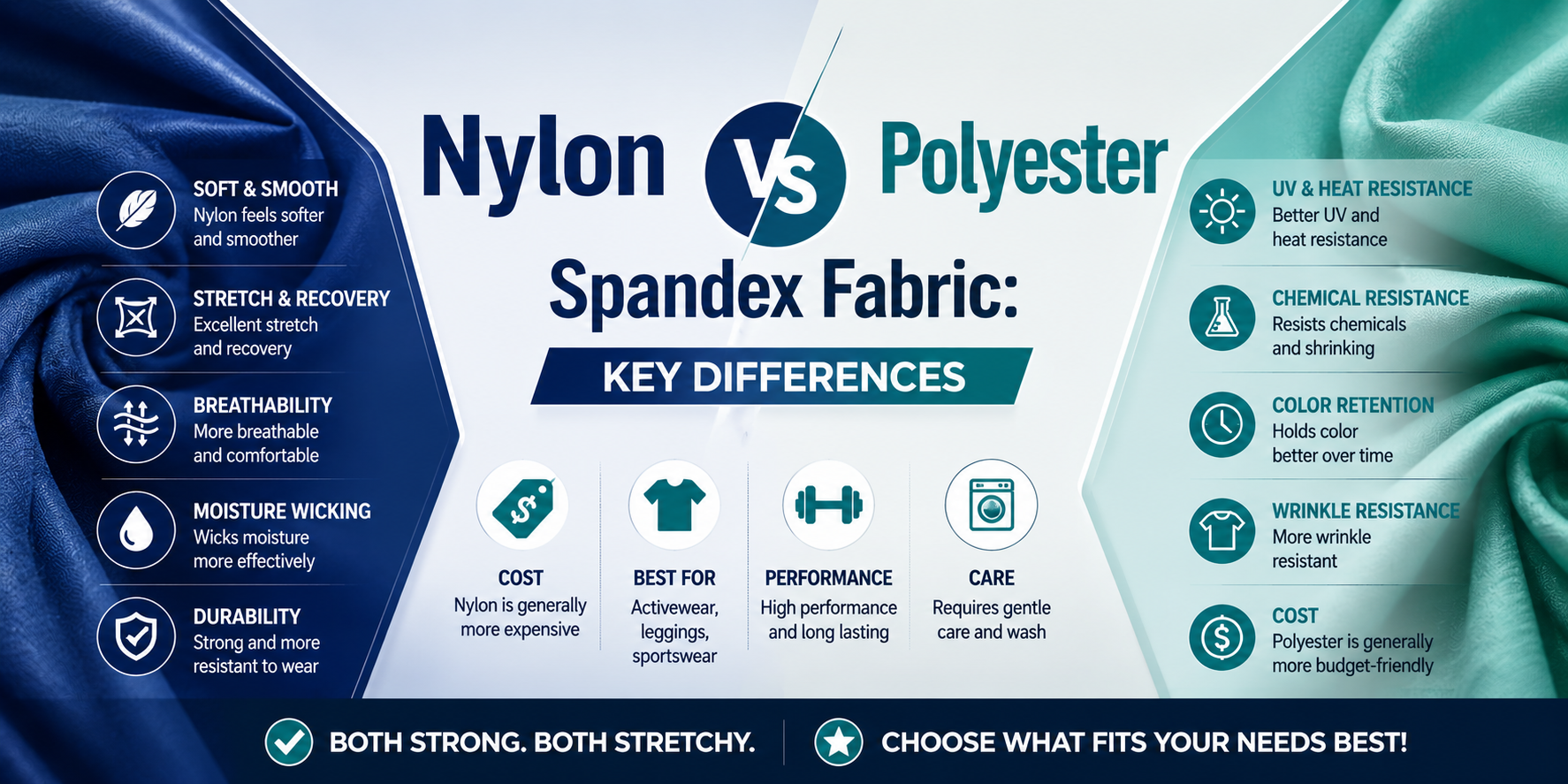
Nylon spandex blends feel soft, smooth, and silky. Great for leggings and yoga wear.
-
Polyester spandex blends are stronger, dry faster, and resist fading. Ideal for gym shirts and running gear.
-
Cotton spandex blends are breathable and comfortable but stretch less and take longer to dry.
Knowing this difference is the foundation of choosing quality activewear fabric.
2. Check the Stretch and Recovery
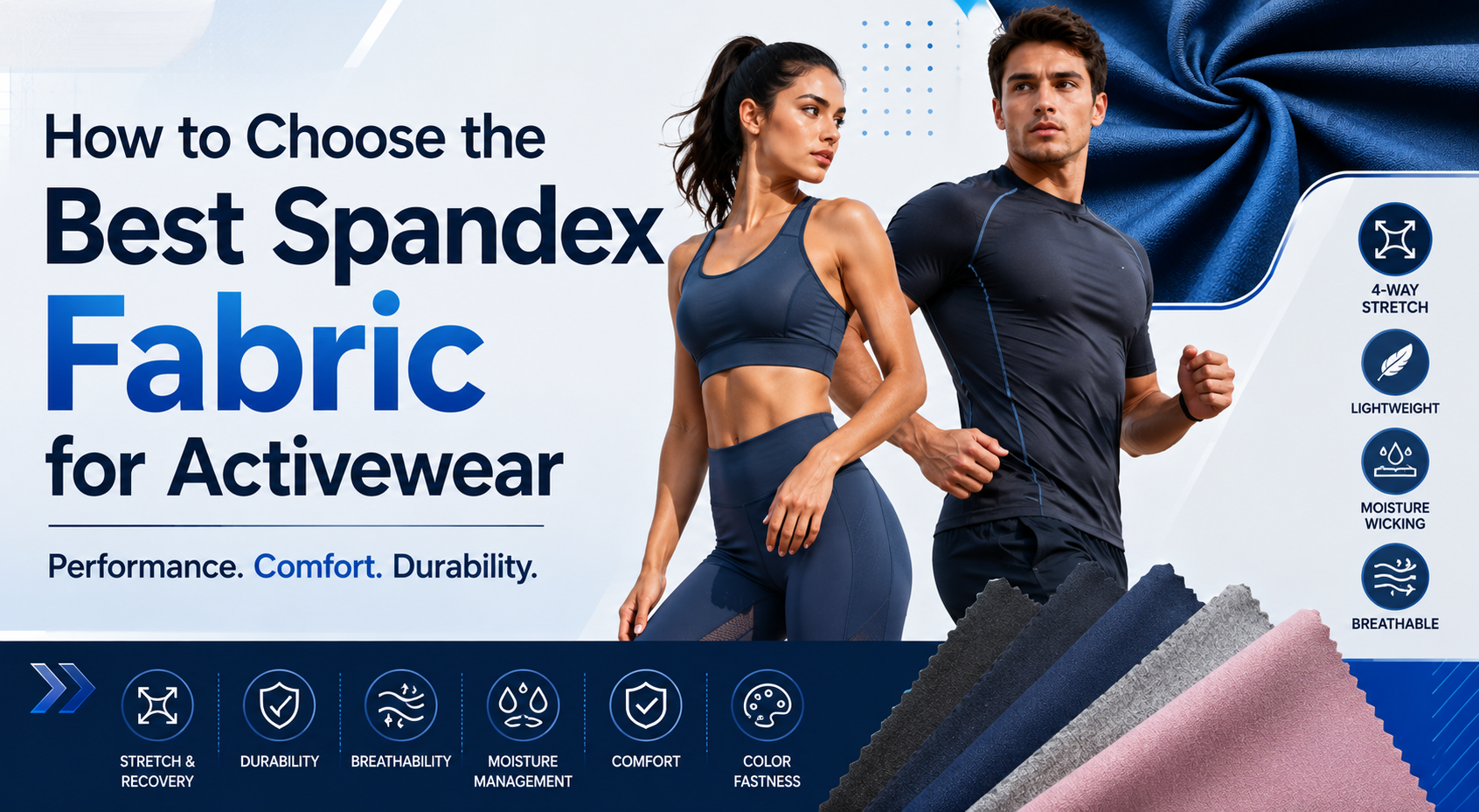
The whole point of spandex is stretch. Look for four-way stretch fabric, meaning it stretches both horizontally and vertically. This is essential for squats, lunges, and high-intensity movement. Equally important is recovery, the fabric's ability to snap back to its original shape. Fabric with poor recovery will sag, bag, and lose shape fast. Always test a sample by stretching it firmly and releasing it. Strong recovery means a longer-lasting garment.
3. Prioritize Moisture-Wicking Performance
For real workout gear, breathability is non-negotiable. Moisture-wicking fabric pulls sweat away from the skin and pushes it to the surface, where it evaporates quickly. This keeps the wearer dry, comfortable, and free from chafing. When sourcing spandex, ask suppliers for moisture management test results, not just marketing claims.
4. Consider Fabric Weight and Compression
Fabric weight, measured in GSM (grams per square meter), affects both comfort and function.
-
Lightweight spandex (150 to 200 GSM) works well for warm weather activewear.
-
Midweight spandex (200 to 280 GSM) is the sweet spot for leggings, sports bras, and everyday gym wear.
-
Heavyweight spandex (280 GSM and above) is best for compression wear used in recovery or high-impact training.
Choose the weight based on the specific activity the garment is built for.
5. Test for Durability and Pilling Resistance
Cheap spandex pills, thins out, and loses elasticity quickly. Strong durable activewear fabric should survive repeated washing, stretching, and friction without breaking down. Look for high denier yarns and tight knit construction. A quick pilling test, rubbing the fabric against itself repeatedly, reveals a lot about long term quality.
6. Look for Odor Resistance and Antimicrobial Treatments
Sweat and bacteria cause odor. Many top activewear brands in the USA now use fabrics treated with antimicrobial finishes. This keeps garments fresher for longer and reduces the need for frequent washing, which also extends the life of the fabric.
7. Confirm UPF Protection for Outdoor Activewear
If the activewear is meant for outdoor workouts, running, or sports played under direct sun, check for UPF rated fabric. Ultraviolet Protection Factor ratings show how well the fabric blocks harmful UV rays, an important factor for health conscious buyers across the USA.
8. Match Fabric to Purpose
Not all spandex fits every activity. Yoga favors soft, four-way stretch blends. Running favors lightweight, moisture-wicking polyester blends. Weightlifting favors heavier, high-compression fabric. Matching fabric choice to activity is the single most important step in this entire process.
Final Thoughts
Choosing the best spandex fabric for activewear comes down to five things: blend, stretch, breathability, weight, and durability. Focus on real performance testing rather than labels alone, and the result will be activewear that customers trust and keep coming back to.