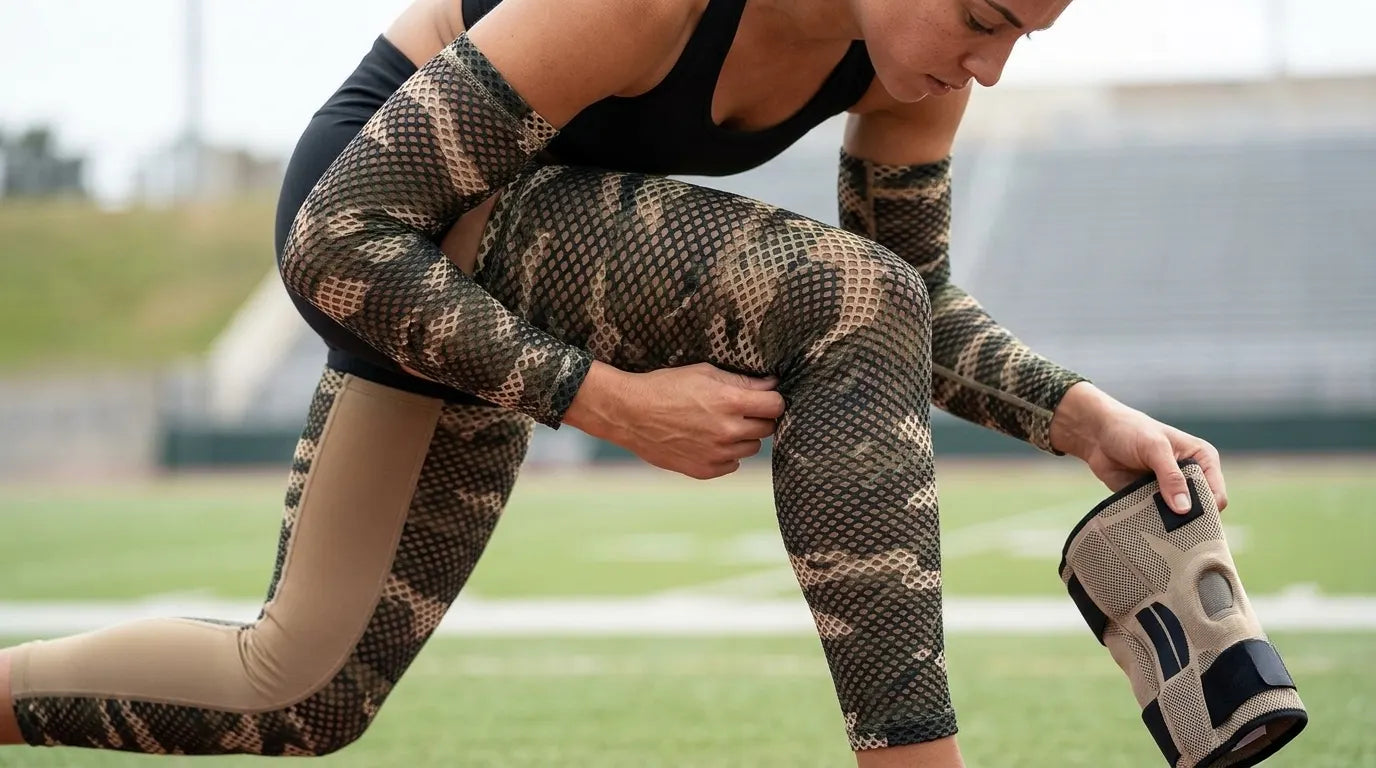
Compression Wear Fabric: What to Source for Medical and Sports Brands
Compression garments sit where comfort, performance and clinical function meet. Whether you are launching post-surgical sleeves, graduated stockings, running tights or recovery wear, the fabric decides how the product feels, how long it lasts and how well it does its job. Sourcing the right material from the start saves you from costly sampling rounds and customer returns.
Why Fabric Choice Matters
Compression works by applying controlled pressure to the body. That pressure depends on fiber content, knit structure, fabric weight and recovery. A fabric that stretches easily but fails to snap back will lose its grip after a few washes. A fabric that is too rigid will restrict movement and irritate the skin. For medical brands, consistent pressure is a safety issue. For sports brands, it affects muscle support, endurance and customer satisfaction.
Key Properties to Look For
Fiber blend. Most compression garments use nylon or polyester combined with spandex. Stretch Nylon Spandex Fabric is a popular choice because it feels soft, resists abrasion and handles repeated wear and washing well. Spandex content usually ranges from 15 to 30 percent for firm compression, while lighter support wear can use less.
Stretch direction. A 4 Way Stretch Spandex Fabric stretches across both the width and the length of the cloth. This lets the garment move with the body in every direction, which is essential for sleeves, leggings, bras and joint supports. Two way fabrics can work for tubular items, but they often bunch or pull in active use.
Weight and density. Compression fabrics commonly fall between 180 and 300 GSM. Heavier knits give stronger support and better opacity, while lighter ones suit warm weather training and everyday medical wear.
Recovery. Ask suppliers for recovery data, not just stretch percentages. Good recovery means the garment returns to its original shape and keeps delivering the same pressure over time.
Sourcing for Medical Brands
Medical compression products face stricter expectations. The fabric should be breathable, gentle on sensitive skin and free from harmful substances. Look for suppliers who can provide Oeko-Tex or similar certifications, and ask about antimicrobial or moisture management finishes if the product is worn for long hours. Consistency matters even more here. Dye lots, stretch levels and thickness must stay uniform from one order to the next so every garment meets the same pressure standard. Keep documentation for each batch, as it helps with quality checks and regulatory conversations.
Sourcing for Sports Brands
Athletes care about moisture control, durability and fit. Choose fabrics that wick sweat quickly, dry fast and resist pilling. Opacity is important, because nobody wants leggings that turn see through during a squat. Colorfastness is another priority, especially for bright shades and swimwear, where chlorine and sun exposure can cause fading. If your line includes outdoor or running gear, consider UV protective finishes and fabrics that keep their shape through hundreds of wash cycles.
Where and How to Buy
Many brands now prefer to Buy Spandex Fabric Online because it gives access to a wider range of fabrics, faster comparisons and simpler reordering. Start by requesting swatches so you can test the stretch, hand feel and recovery yourself. Compare the same fabric under light, medium and heavy tension, and wash it several times before making a decision.
For prototyping, ordering Stretch Fabric by Yard is a smart way to test patterns and fit without committing to full rolls. Once your sample garments pass wear tests and fit trials, you can move to bulk production with confidence and negotiate better pricing on larger volumes.
A Quick Sourcing Checklist
- Confirm the fiber blend and spandex percentage.
- Check stretch direction, GSM and recovery rate.
- Test pilling, abrasion and colorfastness.
- Ask for safety and quality certifications.
- Order swatches, then yardage, then bulk.
- Verify lead times and dye lot consistency.
Conclusion
The best compression wear starts with the right fabric. By focusing on blend, stretch, weight and recovery, and by matching those qualities to the needs of medical or sports customers, you create products that perform and keep people coming back. Take your time with testing, work with suppliers who share clear specifications, and build your range on fabrics you trust.